
Carpenter Bees: How to Protect Your Porch Without Losing Your Mind
- 5 minutes ago
- 2 min read

You step outside with your morning coffee.
The air’s calm.
The birds are singing.
Then you hear it. BZZZZZZZZ.
A bee the size of your thumb hovers in front of your face like it owns the deed to the property.
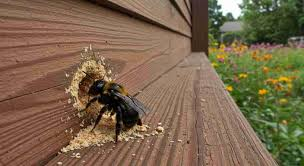
Welcome to carpenter bee season in South Georgia. Carpenter bees look like bumblebees, but there’s a difference: Bumblebees have fuzzy yellow backsides. Carpenter bees have shiny black, bald-looking backsides. They drill perfectly round ½-inch holes in fascia boards, porch ceilings, deck rails, and trim. They aren’t eating your house. They’re building tunnels to lay eggs.
The aggressive ones hovering near your head are males. They cannot sting. Is the damage serious? One hole isn’t a crisis. But they reuse tunnels year after year. Over time you can get weakened trim, connected tunnels, staining beneath holes, and woodpecker damage.
WHAT ACTUALLY WORKS

Carpenter Bee Traps: Install in late winter or very early spring. Mount under
eaves near past activity. They reduce pressure but won’t eliminate every bee.
Peppermint Oil Spray: Mix 1 cup water, 10–15 drops peppermint oil, and a splash of dish soap. Spray under eaves and on rails. Reapply after rain. This discourages activity but does not kill them.
Treat and Plug Holes Properly:
1. Treat active holes at dusk.
2. Wait 24–48 hours.
3. Plug with wood dowel and exterior glue or quality filler.
4. Sand smooth.
5. Prime and paint.
Paint Helps — But It’s Not a Force Field: Carpenter bees prefer bare wood, but they will drill through fresh paint. Paint slows them down but does not guarantee immunity. Layer your defenses: paint, traps, preventative spray, and proper repairs.
Watch for Woodpeckers: If you see shredded trim, woodpeckers may be going after larvae inside the tunnels.
WHAT DOESN’T WORK WELL:
Mothballs stuffed in holes, hanging paper bags, CDs on string, or random daytime spraying.
SMART SEASONAL PLAN
Late Winter: Inspect trim and install traps.
Early Spring: Spray preventatively and monitor sawdust.
Mid-Summer: Treat active holes at dusk.
Late Summer: Plug, seal, and repaint. Carpenter bees aren’t villains. They’re just looking for real estate. But if that real estate is your porch beam, it may be time for a polite eviction.
A little attention each spring can save you from replacing boards down the road.


Comments