
Buying a Home in Southeast Georgia – What Nobody Explains
- May 7
- 9 min read

Part 5: What To Do After the Home Inspection
There are usually two moments when buyers panic during a real estate transaction.
The first is when they see the price.
The second is when they open the inspection report.
I’ve seen it happen more times than I can count. A buyer walks through a home smiling from ear to ear, already talking about where the couch is going to go and whether the guest room should become an office or a nursery. They’re excited. The deal feels real. Then the inspection report hits their inbox later that evening, and suddenly they’re convinced the entire house is one strong wind gust away from collapsing into the nearest swamp.
That emotional swing is incredibly common, especially for first-time buyers.
And honestly?
A lot of it comes from not fully understanding what a home inspection report is actually supposed to be.
The House Didn’t Change Overnight
One of the first things I wish buyers understood is this:
The inspection didn’t create the problems.
The house was in the same condition when you fell in love with it earlier that morning.

The inspection simply brought things to the surface that most people either don’t notice or don’t know to look for.
That’s the job.
A good home inspection is designed to slow things down for a moment and let you see the home through a different lens—not emotionally, but practically.
Because when buyers first walk through a house, they’re usually focused on living there. They notice the kitchen. The layout. The backyard. The pretty floors and fresh paint. They picture birthdays, Christmas trees, and whether the dining room table from the old house is finally going to fit.
Meanwhile, I’m standing over in the corner staring at water stains on the ceiling and wondering why the air handler sounds like a washing machine full of bricks.
Different missions.
And that difference matters.
Why Inspection Reports Feel So Negative
This is probably one of the biggest misunderstandings in the entire home-buying process.
As a home inspector, I’m not being paid to tell you how beautiful the home is. I’m not there to discuss decorating ideas, compliment the landscaping, or tell you where I’d put the sectional sofa.
Truthfully, I barely even notice cosmetic items unless they point toward a maintenance issue.
You didn’t hire me to admire the house.
You hired me to look for problems.
That means my attention naturally goes toward the bad, the worn out, the damaged, the unsafe, the aging, and the questionable. In fact, if a system is functioning normally, I may only mention it briefly before moving on to the next thing that needs attention.
So when buyers open a report for the first time, it can feel overwhelmingly negative because page after page is discussing defects, maintenance concerns, recommendations, and safety issues.
But that doesn’t automatically mean the house is bad.
It usually means the inspector was thorough.
If inspection reports focused equally on all the things that looked nice in the home, they’d probably read a whole lot friendlier. But that’s not what you hired us for. You hired us to find the things you wouldn’t notice while you were busy imagining where the Christmas tree was going to go.
And honestly, that’s money well spent.
No House Is Perfect
This next part is important.
Every house has issues.
Every single one.
I don’t care if the house is:
brand new,
fifty years old,
custom built,
renovated,
or sitting on twenty acres with a magazine-worthy front porch.
Every house has something.
Sometimes it’s small maintenance items. Sometimes it’s deferred maintenance. Sometimes it’s aging components nearing the end of their service life. And occasionally, yes, it’s something significant.
But buyers can get themselves into trouble when they expect an inspection report to come back completely clean.
That’s not realistic.
In fact, if I walked through a home and produced a report with almost no findings at all, I’d be more suspicious of the report than the house.
Homes are living systems. They move, age, settle, wear out, leak, crack, expand, contract, and occasionally do things that make absolutely no sense whatsoever.
That’s homeownership.
Learning the Difference Between “Needs Attention” and “Run for Your Life”
One of the most valuable things a buyer can do after receiving an inspection report is learn how to separate findings into categories.
Because not every defect carries the same weight.
Some issues are true safety concerns. Others are expensive future budgeting items. Some may affect financing or insurance coverage. And some are simply the normal realities of owning a home that’s been standing longer than about fifteen minutes.
That perspective matters.
Take a heaved walkway section, for example. To one person, it may look like nothing more than an uneven crack in the concrete. To me, it’s a trip hazard that could injure somebody. On the other end of the spectrum, an arcing electrical panel may not look dramatic to the average buyer at all—but it has the potential to cause serious property damage or injury.
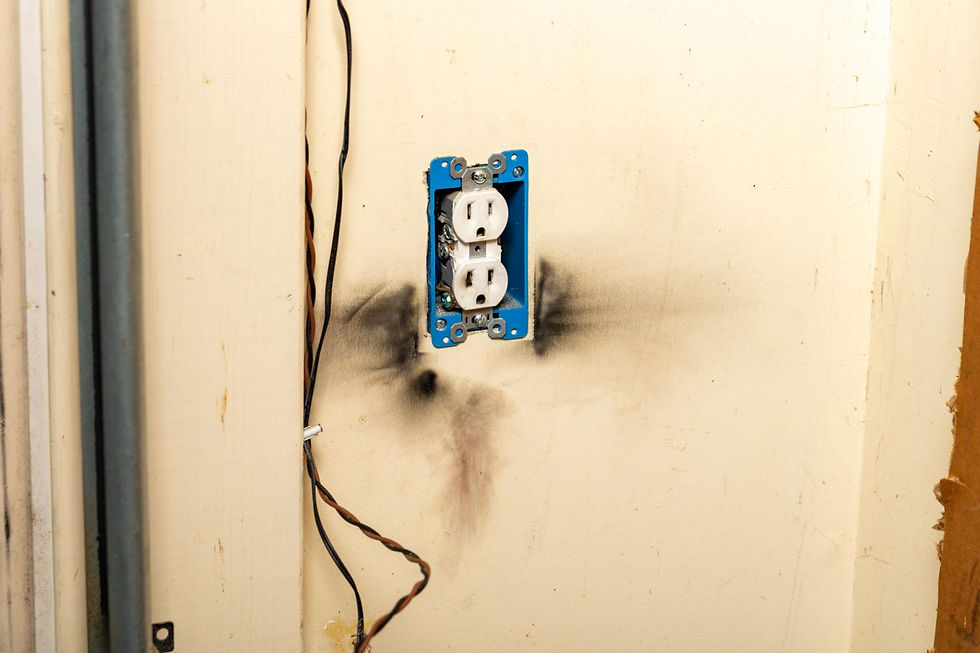
Both are safety concerns.
Different systems. Different severity. Same category.
And when I identify something as a significant safety concern, I’m usually looking at it through one simple lens:
“Could this reasonably hurt somebody or damage the home if left uncorrected?”
If the answer is yes, it moves way up the priority ladder.
Now, that doesn’t automatically mean the deal is dead.
But it does mean the issue deserves serious attention before moving forward.
Then you have another category entirely: aging systems.
A thirty-year-old HVAC system may still be operating the day of the inspection. That doesn’t necessarily make it defective. But it absolutely changes the conversation about budgeting, negotiation, and future expectations.
That’s where buyers sometimes struggle.
Because an old system may not scare a lender at all if it’s functioning properly, but an insurance company may view the age differently. Or the buyer may decide they’re comfortable proceeding as long as the age and future replacement costs are reflected in the deal somehow.
That’s a completely different conversation than active electrical hazards or structural concerns.
Then there are maintenance items.
Loose handrails. Missing caulk. Minor plumbing drips. Worn weatherstripping. Small things that are important to address, but probably shouldn’t trigger a full emotional collapse at the kitchen table.
Part of learning how to read an inspection report is learning how to sort those findings into realistic buckets.
Because not every item deserves the same emotional response.
The Executive Summary – The Conversation After the Inspection
One thing I try to do after most inspections is call my clients and walk them through what I call an “Executive Summary.”
That’s usually the moment where the report starts turning from a scary document into an actual game plan.

We talk through the bigger concerns, the safety issues, the expensive items, and the things that may deserve a closer look before closing. We talk about what I would consider a “top three list” and what might fall into the category of a “non-negotiable repair list.”
Because once buyers understand the relative weight of the findings, the whole report usually becomes much less overwhelming.
And honestly, sometimes buyers just need somebody to tell them:
“Okay… this is important, but it’s not the end of the world.”
That perspective matters.
Especially during a process where emotions tend to run pretty high already.
The Negotiation Trap
Now let’s talk about something that can derail a deal faster than a Georgia thunderstorm rolling in across the marsh.
The temptation to renegotiate absolutely everything.

Once buyers get a report back, it’s easy to start looking at the house like a scorecard. Every loose outlet cover suddenly feels like leverage. Every missing doorstop becomes a line item.
That’s usually not the best approach.
A home inspection report is not a repair invoice. It’s an educational tool designed to help you understand the condition of the property.
The smartest negotiations tend to focus on:
major defects,
safety concerns,
significant deferred maintenance,
or items involving expensive systems nearing failure.
Trying to squeeze concessions out of every tiny maintenance item usually just creates friction and frustration for everybody involved.
And sometimes buyers lose sight of the bigger picture:
You’re buying a used house—not a brand-new toaster still wrapped in plastic.
When Specialists Make Sense
There are times during an inspection when further evaluation by a specialist is absolutely the right call.
That doesn’t mean the inspector is panicking.
It means the inspector understands where the edge of his lane is.
If there are signs of structural movement, significant electrical concerns, HVAC performance issues, roofing concerns, mold-like conditions, septic concerns, or anything else requiring specialized expertise, bringing in the appropriate professional can save a buyer from making a very expensive mistake.
And honestly, buyers shouldn’t view specialist recommendations as a bad thing.
It’s usually a sign the inspector is being careful—not careless.
The Hidden Value Most Buyers Miss
Most buyers think the inspection report only matters before closing.
That’s a mistake.
A good inspection report becomes one of the most useful homeowner guides you’ll ever receive.
Long after the excitement of closing wears off, that report becomes a roadmap for:
maintenance,
future repairs,
budgeting,
upgrades,
and understanding how your home actually works.
In a weird way, it becomes the owner’s manual nobody gave you when the house was built.
You may not fix everything immediately—and honestly, most homeowners don’t—but having a documented understanding of the home puts you far ahead of somebody just guessing their way through ownership.
This Shouldn’t Be a One-Time Relationship
Personally, I’ve never viewed a home inspection as a one-time transaction.
My goal is to do such a thorough job for my clients that when the next inspection need comes along—whether it’s for them, a family member, or a friend—my phone rings again.
And long after closing, I still get calls from past clients asking questions about homeownership, maintenance, and system operation.
Truthfully, I enjoy those calls.
Just recently, I inspected a beautiful lakeside home with an in-ground saltwater pool for a client relocating into the area. The inspection covered not only the home itself, but the pool equipment and operation as well. And even after closing, we’ve stayed in touch so that once everything settles down from the move, I can stop by and walk her through how the pool system operates and what routine maintenance looks like.
And honestly, that’s not unusual.
Sometimes the calls are about changing filters. Sometimes it’s about a GFCI outlet tripping. Sometimes it’s simply:
“Hey Eric, can you remind me what this thing does again?”
That’s part of the relationship.
Because at the end of the day, a good inspection isn’t just about identifying defects.
It’s about helping people feel more confident about the home they’re living in.
Required vs. Smart – One More Thought Before We Wrap Up
By the time you reach the inspection phase, it’s easy to get tunnel vision about what’s “required.” What the lender wants. What the appraiser flagged. What needs to happen to keep the closing date on track.
But smart homeowners eventually realize something important:
The house doesn’t care what was required.
The roof is going to age whether someone looked closely at it or not. The plumbing is going to do whatever the plumbing was already planning to do. And that crawlspace moisture problem isn’t going to politely wait until after closing to introduce itself.
That’s why the inspection process shouldn’t just be about surviving the transaction.
It should be about understanding what kind of home—and what kind of responsibilities—you’re actually stepping into.
Because the smartest buyers aren’t necessarily the ones who buy the “perfect” house.
They’re the ones who walk into ownership with their eyes open.
Final Thoughts (From the Porch)
At the end of the day, a home inspection isn’t designed to scare you away from a house.

It’s designed to help you understand it.
A good report gives you clarity. Perspective. A chance to make informed decisions before life gets expensive.
And while no house is perfect, surprises tend to get a whole lot less painful when somebody took the time to point them out beforehand.
So when that report lands in your inbox and your heartbeat jumps a little, take a breath before convincing yourself the house is falling apart.
Most of the time, what you’re really looking at is a detailed picture of homeownership.
And trust me—that’s a whole lot better than finding out the hard way later.
And if there’s one last thing I’d leave you with, it’s this:
Don’t be afraid to ask questions.
A good home inspector shouldn’t disappear the moment the report gets delivered. Homeownership comes with a learning curve, and sometimes the smallest questions can save homeowners from the biggest headaches later on.
Truthfully, some of the best conversations I have with past clients happen long after closing day. And whether it’s a maintenance question, a concern about a system, or simply trying to remember how something in the home operates, I’m always happy to help point people in the right direction.
Because at the end of the day, the goal isn’t just to inspect houses.
It’s to help people feel confident living in them.

Great read!! Understanding your home inspection report in an easy to understand format. Excellent explanations as to why a thorough report doesn't necessarily mean its a bad house or investment. Fantastic examples of the categories (defects, maintenance concerns, recommendations, and safety issues), every good home inspection report should have. Highly recommend this article to anyone purchasing a home and especially those first time home buyers.