
Buying a Home in Southeast Georgia – What Nobody Explains
Part 6: Why Insurance Companies Care About Things Buyers Ignore

There’s a moment in a lot of real estate transactions where buyers suddenly discover the insurance company is no longer quietly sitting in the background minding its own business.
That moment usually sounds something like this:
“Wait… the insurance company has a problem with the house?”
And just like that, everybody’s blood pressure goes up.
The buyer is confused. The seller is irritated. The Realtor is making phone calls. And somewhere, an underwriter is staring at photographs of a rusty roof and a pecan tree hanging over the master bedroom wondering how much risk they’re about to inherit.
Truthfully, this catches a lot of people off guard because buyers and insurance companies look at homes very differently.
A buyer sees charm.
An insurance company sees probability.
A buyer sees a beautiful old oak tree dripping with Spanish moss and imagines a swing hanging from the branch someday. An underwriter sees wind exposure, roof damage, and an expensive claim waiting for the next tropical storm to wander across Southeast Georgia.
Neither one is necessarily wrong.
They’re simply looking at the same property through very different lenses.
And understanding that difference before closing day can save buyers a tremendous amount of frustration later.
The Myth: “If I Can Buy It, I Can Insure It”
A lot of buyers assume that once the bank approves the loan, the hard part is over.
Not necessarily.
In today’s insurance environment, especially throughout the South, homeowner’s insurance has quietly become its own hurdle in many transactions.
A house may qualify for financing, appraise correctly, and even survive the inspection process just fine, only for the buyer to suddenly discover the insurance company has concerns.
Sometimes it’s the age of the roof. Sometimes it’s an outdated electrical panel. Sometimes it’s prior water damage, plumbing concerns, or visible deferred maintenance. And occasionally, it’s simply the overall risk profile of the property itself.
Insurance companies have become far more cautious over the last couple of decades, and a lot of that caution was learned the hard way.
According to the Insurance Information Institute, weather-related and water-related losses remain some of the costliest homeowner claims in the country. Insurance companies pay very close attention to anything that increases the likelihood of future losses because once a claim starts, the costs have a way of snowballing quickly.
And that means they often care deeply about things buyers either overlook completely—or simply don’t yet understand.
Roofs Run the Show
If there’s one part of a home that can create insurance headaches faster than almost anything else, it’s the roof.

Especially here in Georgia.
Most buyers simply want to know whether the roof currently leaks. Insurance companies are usually asking a much different question:
“How likely is this roof to cost us money later?”
That’s a very different conversation.
A roof may technically still be keeping water out of the home while simultaneously making an underwriter extremely uncomfortable.
An aging architectural roof with heavy granular loss, brittle shingles, multiple patch repairs, exposed fasteners, or signs of prior storm damage may still appear “serviceable” to the average homeowner. To an insurance company, however, those same conditions may suggest elevated future claim potential.
Metal roofs create another interesting conversation around Southeast Georgia. A little surface rust on an old barn may feel perfectly normal around here. But when that same aging metal roof sits over conditioned living space, insurance companies may begin seeing deferred maintenance, corrosion concerns, and future leak potential.
And honestly, this is where buyers sometimes get blindsided.
A twenty-five or thirty-year-old roof may still technically function the day of the inspection. That doesn’t automatically mean the roof has failed. But insurers often care just as much about remaining service life as they do present-day performance.
That’s why roof age has become such an important topic during inspections and insurance evaluations alike.
Trees, Storms, and Southeast Georgia Reality
Now let’s talk about trees for a minute.
Because around here, we love them.
Towering pecan trees. Giant old oaks. Long branches hanging over porches with Spanish moss swaying in the breeze like something out of a Southern postcard.
Buyers see beauty.
Insurance companies see gravity.
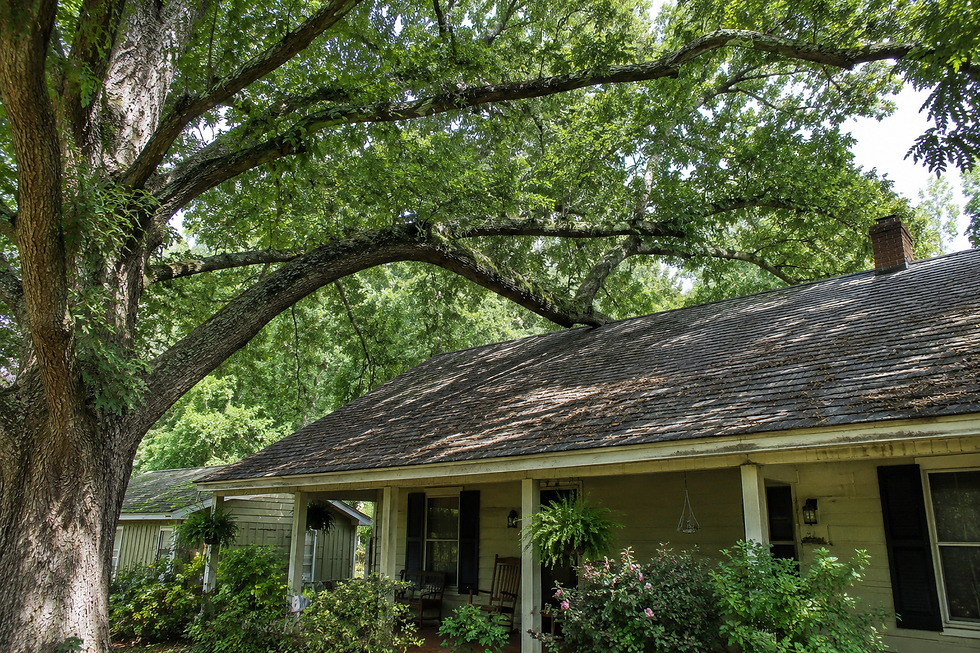
After years of hurricanes, tropical systems, hail events, and wind claims throughout the Southeast, underwriters have become increasingly sensitive to exterior property risks. Large limbs hanging over the roofline may create shade and curb appeal, but they also create impact hazards during storms.
And the insurance company knows storms eventually come.
That’s one reason inspectors often pay attention to tree placement, roof contact, and exterior maintenance conditions. It’s not because we dislike mature landscaping.
It’s because we understand what tends to happen after sixty-mile-an-hour winds get involved.
The Four-Point Inspection Conversation
At some point during the transaction, many buyers hear the phrase:
“The insurance company wants a four-point inspection.”
That usually creates immediate confusion because most people assume it’s simply another version of the home inspection.
Not quite.
A four-point inspection is a much narrower evaluation focused primarily on the four systems insurance companies care about most:
roofing,
electrical,
plumbing,
and HVAC.
In other words, the systems most likely to generate expensive claims.
Insurance companies aren’t typically worried about whether your dining room paint color is outdated or whether the kitchen backsplash matches the countertops. They’re trying to determine whether the house presents an elevated risk for fire, water damage, system failures, or major losses.
And once buyers understand that perspective, the entire insurance process starts making a lot more sense.
Electrical Panels Have a Reputation Too
This is another area where buyers often discover problems they never knew existed.
Certain older electrical panels developed reputations over the years for overheating, breaker failures, or fire concerns. Panels such as Federal Pacific and Zinsco tend to make insurance companies very nervous because of their historical track records.

Now, that doesn’t necessarily mean the house is about to burst into flames the moment somebody plugs in a toaster.
But insurance companies deal in probabilities.
And if a particular component has a long history of failures or fire-related concerns, many insurers simply decide they no longer want the risk.
The same thing happens with amateur electrical work.
Double-tapped breakers, damaged wiring, overloaded circuits, open junction boxes, scorched conductors, and “handyman specials” hidden behind panel covers may go completely unnoticed during a casual showing. But once the panel cover comes off during an inspection, the conversation can change pretty quickly.
And honestly, some of the scariest things inspectors find are hidden where buyers rarely think to look.
Water Damage Is Where Things Get Expensive
If roofs are the king of insurance concerns, water damage is probably sitting right beside it wearing the crown jewels.
Because water rarely damages just one thing.
A small plumbing leak may eventually become damaged flooring, swollen cabinetry, ruined drywall, saturated insulation, microbial growth, electrical concerns, structural deterioration, or thousands of dollars in repairs nobody saw coming.
That’s why inspectors spend so much time chasing moisture indicators.
Water stains on ceilings. Plumbing drips under sinks. Damp crawlspaces. Poor grading. Water intrusion around windows and doors. Rust around water heaters. Signs of active leakage around HVAC systems.

A buyer may look at a stain and think:
“That can probably be painted.”
An insurance company is more likely to ask:
“What caused it, how long has it been happening, and is it still active?”
Very different conversations.
And around Southeast Georgia, where humidity itself sometimes feels like a second atmosphere, moisture problems have a way of growing quietly until they become expensive.
The Mold Conversation Nobody Wants To Have
Now we need to talk about something that surprises a lot of homeowners.
Mold coverage.
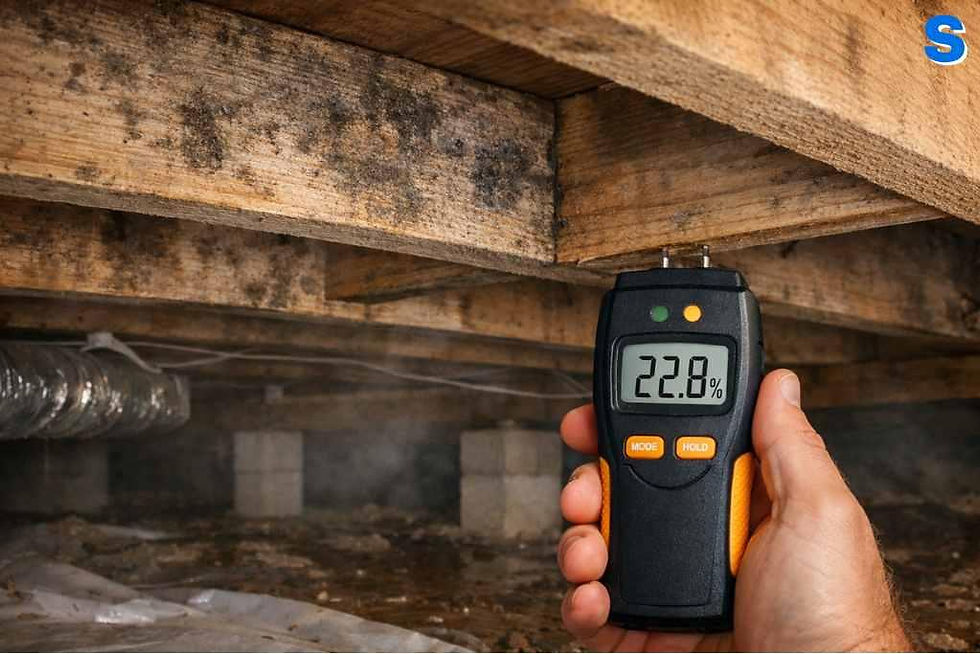
Back around the late 1990s and early 2000s, insurance companies across the
country started taking major financial hits from mold-related claims, particularly in humid Southern states. And over time, many insurers responded by limiting mold coverage, capping payouts, narrowing policy language, or excluding certain moisture-related situations altogether.
That’s why homeowners are often shocked to discover that mold remediation may not be covered the way they assumed it would be.
And here in Southeast Georgia, moisture is simply part of life.
High humidity, crawlspaces, roof leaks, plumbing failures, condensation, poor ventilation, and aging HVAC systems can all create conditions favorable for mold growth if ignored long enough.
Now, mold itself is often the symptom.
Moisture is usually the real problem.
And from an insurance standpoint, long-term moisture issues can become very complicated conversations very quickly. Insurance companies may look very differently at a sudden pipe burst than they do a slow leak that appears to have been happening quietly behind a wall for the last three years.
That’s one reason buyers should pay very close attention to moisture concerns during the inspection process before the depos
it check slides across the desk.
Because insurance companies may not view mold the same way homeowners do.
Drainage Matters More Than Buyers Think
This is another issue buyers often underestimate.
Standing water in the yard. Water draining toward the home. Saturated crawlspaces. Soft ground around the foundation. Soggy drain fields that never seem to dry out.

To some buyers, those things feel like inconveniences.
To experienced inspectors and insurance companies, they often represent future problems already trying to introduce themselves.
Poor drainage contributes to foundation settlement, crawlspace moisture, wood decay, water intrusion, mold concerns, and long-term structural deterioration. And around Southeast Georgia, where heavy rains can show up fast and stick around for days, drainage problems eventually tend to reveal themselves one way or another.
Water is patient.
It may take years.
But eventually, water usually wins.
Learning to Think Like an Underwriter
One of the smartest things a buyer can do during the inspection process is temporarily stop looking at the house emotionally and start looking at it like an insurance company would.
Not:
“Do I love this house?”
But:
“What future problems does this house appear likely to create?”
That shift in thinking changes everything.
Suddenly:
the aging roof matters,
the plumbing leaks matter,
the electrical panel matters,
the overhanging tree matters,
and the crawlspace moisture stops feeling like “just one of those things.”
That doesn’t mean buyers should panic.
It simply means they should understand what they’re purchasing.
Because the goal of a good inspection isn’t to scare people away from homes.
It’s to help them walk into ownership with their eyes open.
Final Thoughts (From the Porch)

At the end of the day, insurance companies aren’t emotionally attached to your
dream home.
They’re evaluating risk.
A buyer may see charm, character, and possibility.
An underwriter may see three layers of roofing, a thirty-year-old HVAC system, active plumbing leaks, and a tree hanging over the garage during hurricane season.
Neither one is necessarily wrong.
They’re simply looking at the property from different perspectives.
And the more buyers understand those perspectives before closing day, the fewer unpleasant surprises they’re likely to encounter later.
Because once the papers are signed and the moving truck pulls away, those systems—and those risks—become yours.
And trust me, it’s a whole lot better to understand them before life gets expensive.

Comments